Dog Gut Flora: What You Need to Know
What is a dog's gut flora?
The gut flora, also in dogs, consists of a community of bacteria, fungi, and other microorganisms that live in the intestines. There are many of them, millions, or even billions. These microorganisms form a kind of ecosystem that helps break down the food the animal eats, releasing nutrients.
Bacteria and fungi don't have a good reputation. But they belong in the gut flora. In the right proportion, at least. The gut microbiome is mainly located in the large intestine, but microorganisms are also present in the small intestine. The large intestine is
important because most fermentation processes take place there. Fermentation is the process by which bacteria break down biological materials into smaller molecules, with the help of oxygen. This happens in the intestines, but fermentation is found everywhere (alcoholic beverages like beer and wine are made by fermentation, cheese is created by fermentation, and vegetables are fermented, such as pickles and sauerkraut). In a dog's body, fermentation is an important part of the digestive process.
Scientists are learning more and more about the gut flora, but there is still much that we don't know. For example, research is being done into how the microbiome develops and what factors influence that gut flora. In any case, it appears that the gut flora is genetically determined; it is present at birth. Diet influences it, as do medications and certain digestive disorders. It also turns out that the gut microbiome in dogs differs less from that of humans than previously thought. Researchers believe this is because after dogs were domesticated, they were given foods that humans also eat. This type of research primarily focuses on the gut flora of dogs in the large intestine. These are easier to study (through feces) than those in the small intestine, where samples are harder to obtain.
The balance in gut flora
We do know that every dog has gut flora. This can also become disrupted. You'll notice this, for example, through abnormal poop. Think of diarrhea, slimy, or even hard stool. It is also investigated whether disrupted gut flora causes certain behaviors. Eating grass, for example, or eating poop or soil. This can be a behavioral problem, but it doesn't have to be. It can also be a search for minerals.
If you suspect something is wrong with your dog's intestines, the vet can perform an examination. A holistic vet or nutritionist are also good sources of help, for example. Of course, also ensure that your dog's diet is complete.
Wolves: the origin of the dog's gut flora
We know that dogs (Canis lupus familiaris) are descended from wolves (Canis lupus laniger). Dogs were domesticated and then another step was taken, namely by breeding dogs for specific physical characteristics and character traits, in the form of dog breeds.
Wolves living in the wild naturally have a different diet than dogs. They don't get processed food, medicines, or vaccinations. Although research shows that the latter two do end up in the gut flora by eating livestock. Wolves usually eat the entrails of their prey, including the stomach contents. Although most pet dogs rarely have the opportunity, they also often eat a captured rabbit or rodent whole (due to possible diseases and bones, we do not simply encourage this).
The theory behind this is that the entrails, such as the stomach, contain digested food residues. Prey animals are largely herbivores (plant-eaters), so these food residues are plant-based and already (partially) fermented.
Wolves and other wild canids (such as coyotes and foxes) also easily adapt their eating habits to availability. This is sometimes even seasonal and can also be plant-based (berries, but also human waste). In any case, we know that dogs are omnivores, not carnivores. This means that dogs eat meat and fish, but also plants, such as vegetables, herbs, and berries.
Tripe and Yogurt Cultures
To offer the stomach content of prey animals in some way, some pet owners choose to feed their dog (green) tripe. Green tripe, also known as unwashed tripe, is the unwashed stomach of a ruminant, such as a cow or sheep. It is the first of these animals' four stomachs, where food is pre-digested. Green tripe still contains remnants of the stomach contents, such as grass and other plant materials the animal has eaten. These remnants are already partially fermented. After all, the cow or sheep also had intestinal flora. Some people also give their dog yogurt or other fermented dairy products, such as kefir.
Anyone who has ever fed tripe or yogurt or cheese to their dog knows that it is often received with great enthusiasm: dogs usually love it.
The disadvantage is that green tripe is difficult to obtain, especially in its unprocessed version. Due to intensive livestock farming (factory farming), where grazers receive medication, the quality of this green tripe is no longer good. In addition, it smells very strongly; the scent is often not perceived as pleasant by humans, but it is by dogs. As for dairy, dogs often have limited lactose tolerance. Moreover, it provides a significant amount of calories.
Alternative to tripe (and yogurt): Bokashi and Peat Extract
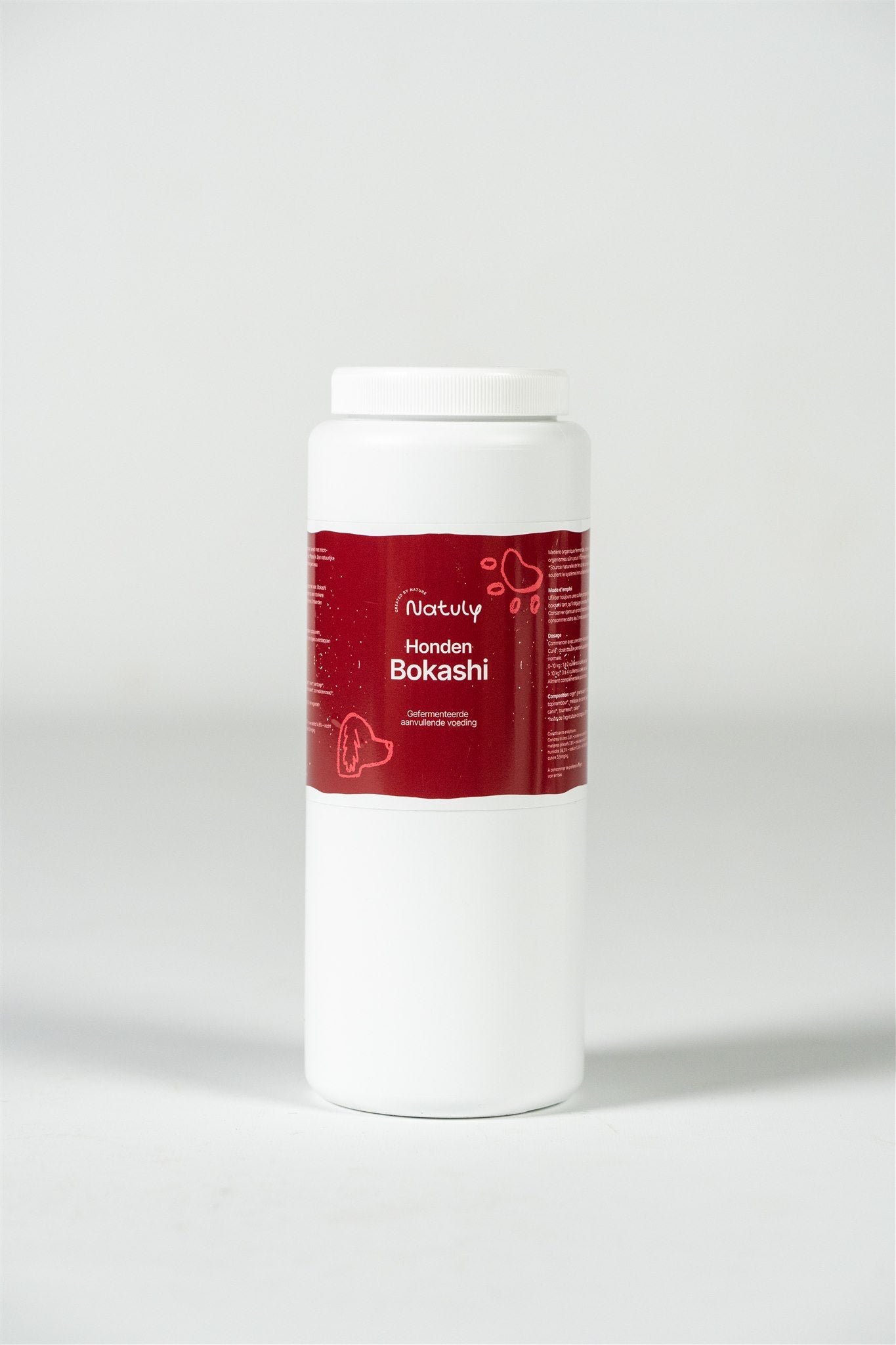
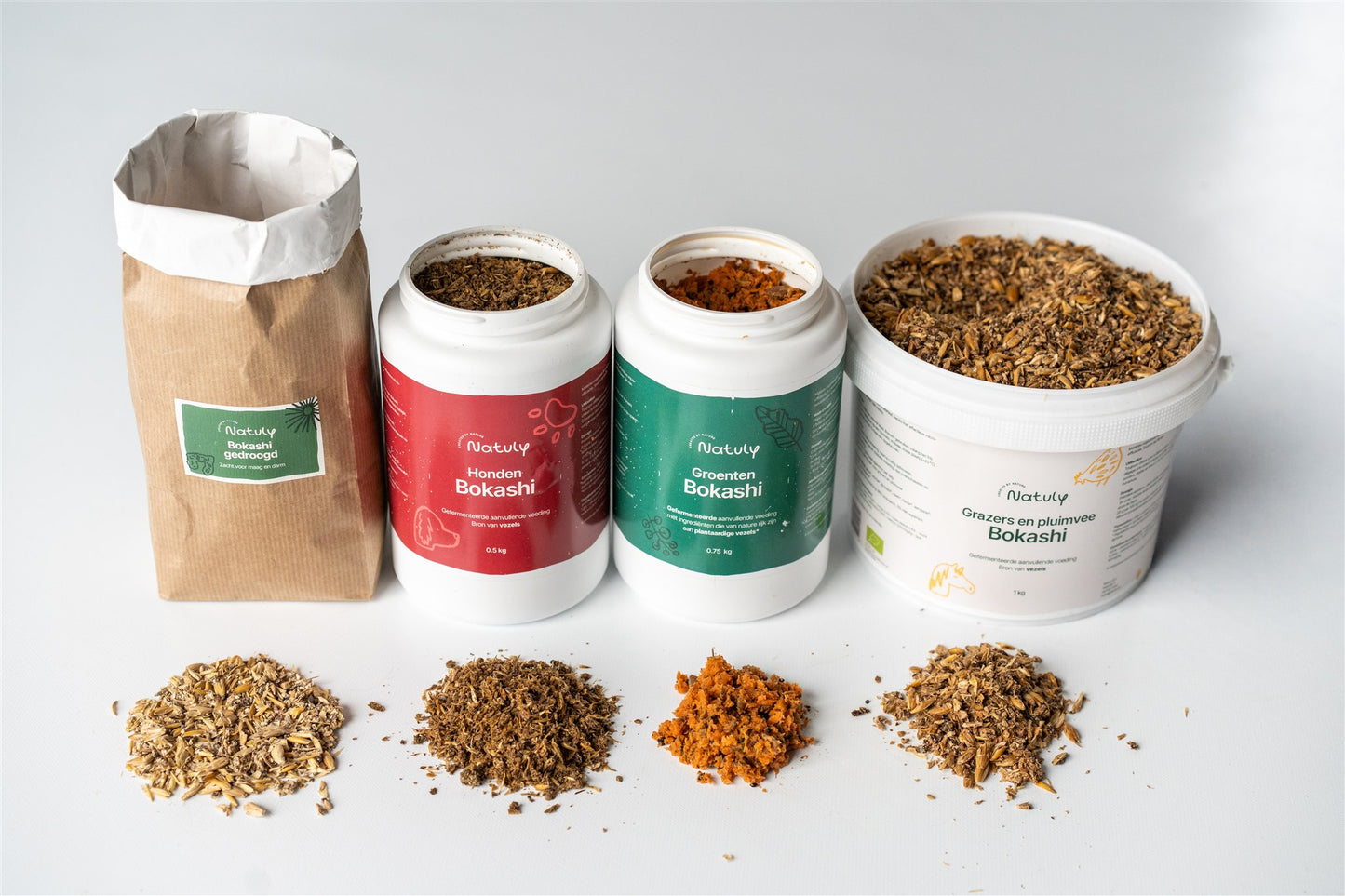
Many dog owners want to give something extra and are therefore looking for a suitable alternative to tripe or yogurt. Bokashi consists of fermented vegetables, seeds, and/or grains.
It works well together (but can also be used separately) with peat extract. Peat extract is a natural soil product that originates from the digestive remains of various plants, including flowers, herbs, grasses, and fruits. These plant remains have sunk into stagnant water over thousands of years and settled at the bottom, where they have been transformed into a black, thick peat in a long process. It contains organic minerals and trace elements (humic acids, fulvic acids, and silicon, for example). We also call it primeval mud.
Bokashi is a fermented product. There are different types, but they all consist of fermented plants and herbs. For example, it contains thyme, alfalfa, cumin, and celery, all of which are good for digestion*. Linseed is also good for digestion* and bowel function*1. Barley grain fibers also contribute to an increase in fecal bulk. It promotes bowel function and intestinal transit. Oat grain fibers do the same.
Bokashi and peat extract complement each other, but you can also add them separately to your dog's meals. It is well tolerated, and most dogs also find it very tasty. That's also nice! A dog that feels good makes you, as the owner, happy too.
1* Health claims awaiting European approval.
Natuly
Organic Bokashi for dogs
Share

Read more
View all-
Is organic grass seed greener and faster-growin...
A good seed is the beginning of a healthy ecosystem. Organic grass seed and flower seed grow from plants that have been cultivated in balance with nature. They often grow...
Is organic grass seed greener and faster-growin...
A good seed is the beginning of a healthy ecosystem. Organic grass seed and flower seed grow from plants that have been cultivated in balance with nature. They often grow...
-
What does a chicken truly need?
What does a chicken really need? The answer doesn't lie in one product, but in how a chicken lives. In this blog, we share how foraging, soil, nutrition, and environment...
What does a chicken truly need?
What does a chicken really need? The answer doesn't lie in one product, but in how a chicken lives. In this blog, we share how foraging, soil, nutrition, and environment...
-
Bokashi - Food that lives
The natural fermentation process creates a product that not only nourishes but also contributes to balance throughout the entire system.
Bokashi - Food that lives
The natural fermentation process creates a product that not only nourishes but also contributes to balance throughout the entire system.
-
The benefit of whole foods, back to basics
In a world where everything seems to need to be faster and more convenient, we see it everywhere: synthetic or "natural" powders, pills, and sweets that are primarily easy and...
The benefit of whole foods, back to basics
In a world where everything seems to need to be faster and more convenient, we see it everywhere: synthetic or "natural" powders, pills, and sweets that are primarily easy and...